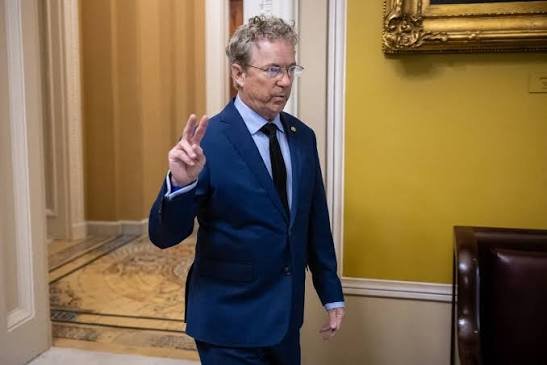
Senator Rand Paul, a prominent figure in the U.S. Senate known for his advocacy of fiscal conservatism, has recently drawn criticism over his use of private jets funded by taxpayer dollars. While Paul often emphasizes the importance of reducing government spending and promoting fiscal restraint, his own travel habits appear to contradict this message.
Public vs. Private Spending
Paul, a Republican from Kentucky, has long positioned himself as a fiscal watchdog, frequently criticizing government waste and pushing for spending cuts. His political platform often includes calls for reducing the national debt and limiting federal spending. However, recent reports have highlighted a discrepancy between his public messaging and his personal travel expenses.
According to a recent report from Politico, Paul and his staff have been utilizing private jets for official travel, with the costs borne by taxpayers. The report suggests that these flights, which are often more expensive than commercial alternatives, are funded through the same public funds that Paul advocates for trimming.
Context and Background
Rand Paul has been a vocal critic of government overreach and has consistently argued for limited federal power. He has frequently spoken out against wasteful spending, particularly in areas like defense and entitlement programs. His libertarian views have made him a polarizing figure, with some praising his fiscal discipline and others criticizing his inconsistency in practice.
The issue of private jet use by public officials has been a topic of debate for years. Many lawmakers and their staff have been known to use private aircraft for convenience, security, or political messaging. However, the contrast between such practices and the rhetoric of fiscal responsibility has sparked renewed scrutiny, especially in an election year.
Public Reaction and Political Implications
The report has prompted both support and backlash from the public. Some Republicans have defended Paul, arguing that the cost of private travel is justified by the need for security and efficiency. Others, particularly within the Democratic Party, have seized on the issue as an example of hypocrisy and a potential campaign issue.
Paul's office has not yet issued a formal response to the report, but the controversy has already begun to ripple through political circles. It raises broader questions about the transparency and accountability of public officials, especially those who advocate for fiscal responsibility.
As the political landscape continues to evolve, the issue of how public officials use taxpayer money will likely remain a focal point for both critics and supporters. For Rand Paul, the challenge will be to reconcile his public messaging with the reality of his personal travel choices, a balancing act that could have significant implications for his political future.