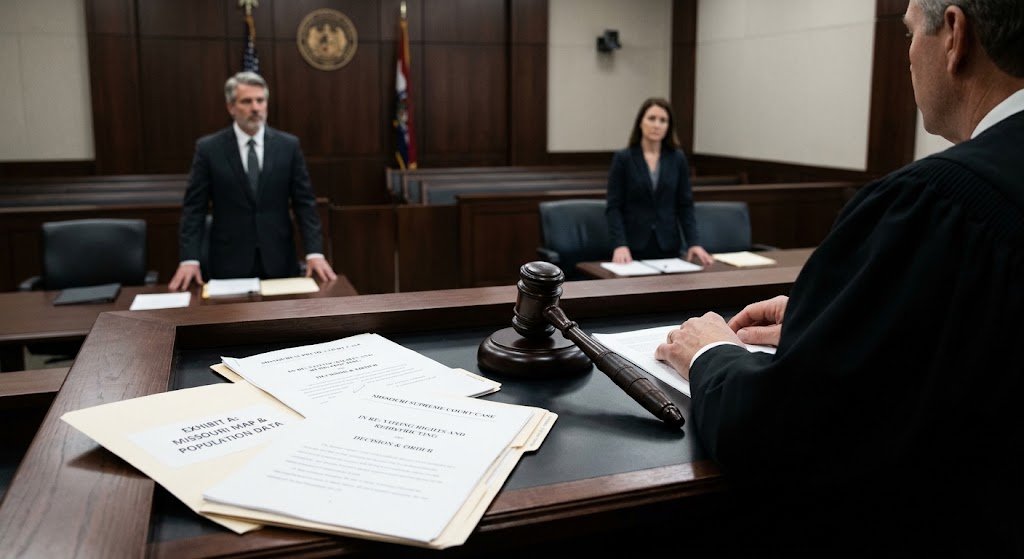
In a recent ruling, the Missouri Supreme Court has labeled Republican state senator and former governor Eric Hoskins as 'disingenuous' for his statements regarding the use of the 2022 congressional map. The court's decision, which was reported by FOX4KC.com, highlights the ongoing legal and political tensions surrounding voting rights and electoral map design in the state.
Context of the Ruling
The case centers on the state's congressional map, which was drawn following the 2022 elections. The map, which was backed by Republican lawmakers, has been the subject of significant legal scrutiny. The Supreme Court's ruling comes as part of a broader trend of judicial interventions in redistricting processes across the United States, especially in states with politically divided legislatures.
Hoskins, who was a key figure in the legislative process that led to the map's creation, faced criticism for his public statements about the map's fairness and intent. The court found his claims to be misleading and not aligned with the evidence presented during the legal proceedings. This decision has sparked renewed debate about the role of state legislatures in redistricting and the extent to which courts should intervene in such matters.
Legal and Political Implications
The ruling has broader implications for the political landscape in Missouri and beyond. It reinforces the judiciary's role in ensuring that voting maps are drawn in a manner that upholds constitutional principles and fair representation. This has been a contentious issue in recent years, with many states facing lawsuits over gerrymandering and the impact of such maps on election outcomes.
The decision also reflects the increasing polarization in state politics, particularly around issues of voter access and electoral fairness. With the Supreme Court's involvement, the ruling has added another layer of complexity to the already contentious redistricting process in Missouri.
Public Reaction and Future Outlook
Public reaction to the ruling has been mixed. While some have praised the court for upholding democratic principles, others have criticized the decision as an overreach of judicial power. The ruling is expected to influence future legislative actions and may lead to further legal challenges related to the state's voting map.
As the political landscape continues to evolve, the outcome of this case will likely serve as a precedent for similar disputes in other states. The Missouri Supreme Court's decision has not only impacted the current political climate but has also set a precedent that could shape future redistricting efforts across the country.