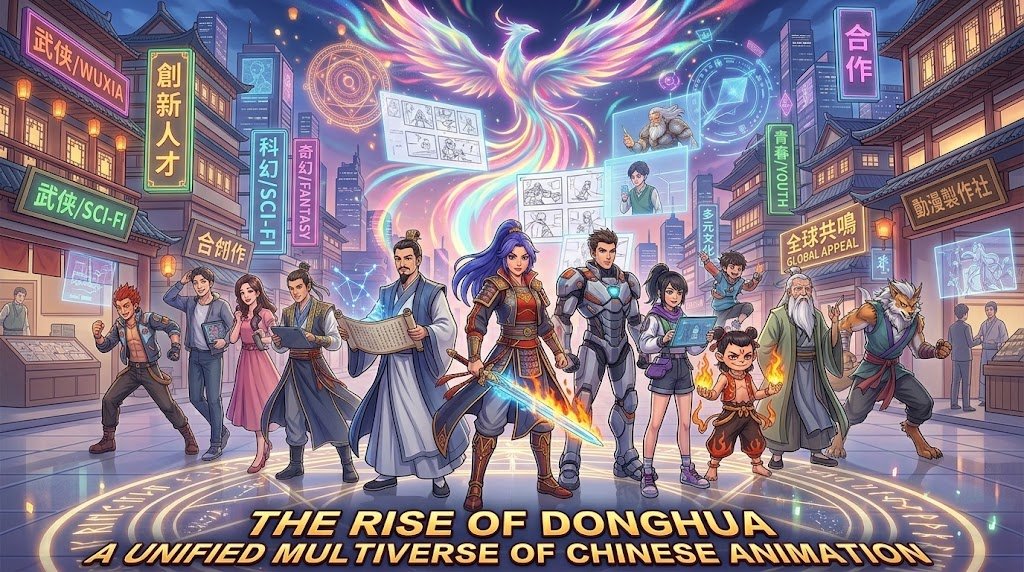
As the global anime market continues to expand, Chinese donghua are gaining significant traction, challenging the long-standing dominance of Japanese anime. With a growing audience base and increasing production quality, Chinese creators are making a strong case for their content to rival its Japanese counterparts. This shift has not only influenced international viewers but also sparked a renewed interest in the cultural and creative potential of Chinese animation.
The Rise of Chinese Donghua
Chinese animation, or 'donghua,' has evolved from a niche market to a global phenomenon. Over the past decade, the industry has seen a surge in investment, talent, and innovation, leading to the production of high-quality series that capture the imagination of both local and international audiences. Unlike the traditional Japanese anime model, which often focuses on serialized storytelling and character development, Chinese donghua is rapidly adopting diverse formats and themes, from fantasy and sci-fi to slice-of-life and psychological thrillers.
Key Factors Behind the Success
One of the main reasons for the success of Chinese donghua is the increasing availability of streaming platforms that cater specifically to this genre. Platforms such as Tencent Video, Youku, and Bilibili have played a crucial role in making these shows accessible to a global audience. These platforms not only provide a space for content creation but also offer data-driven insights that help creators refine their storytelling and audience engagement strategies.
- Streaming Platforms: Platforms like Bilibili have become essential for the distribution and promotion of Chinese donghua.
- Storytelling Quality: Many Chinese donghua series now feature complex narratives, well-developed characters, and visually stunning animation.
- Global Appeal: Shows like 'Sword Art Online: Infinity Moment' and 'The King's Avatar' have gained international popularity, attracting viewers from around the world.
- Collaborations and Cross-Promotion: Collaborations between Chinese and international studios are also helping to increase the visibility of Chinese donghua on the global stage.
Challenges and Opportunities
Despite the growing success of Chinese donghua, there are still challenges to overcome. One of the biggest hurdles is the perception that Chinese animation is less sophisticated compared to its Japanese counterpart. However, this is gradually changing as more high-quality content is being produced and shared with a global audience. Additionally, there are opportunities for collaboration between Chinese and Japanese creators, which could lead to even more innovative and diverse content in the future.
Conclusion
The rise of Chinese donghua is not just a trend but a significant shift in the global anime landscape. With continued investment, innovation, and international collaboration, Chinese animation is proving that it can stand shoulder to shoulder with the best of Japanese anime. As more viewers discover the unique storytelling and visual styles of Chinese donghua, it's clear that the future of animation is becoming increasingly diverse and inclusive.